

Psychological Safety
The Invisible Foundation of High-Performing Teams
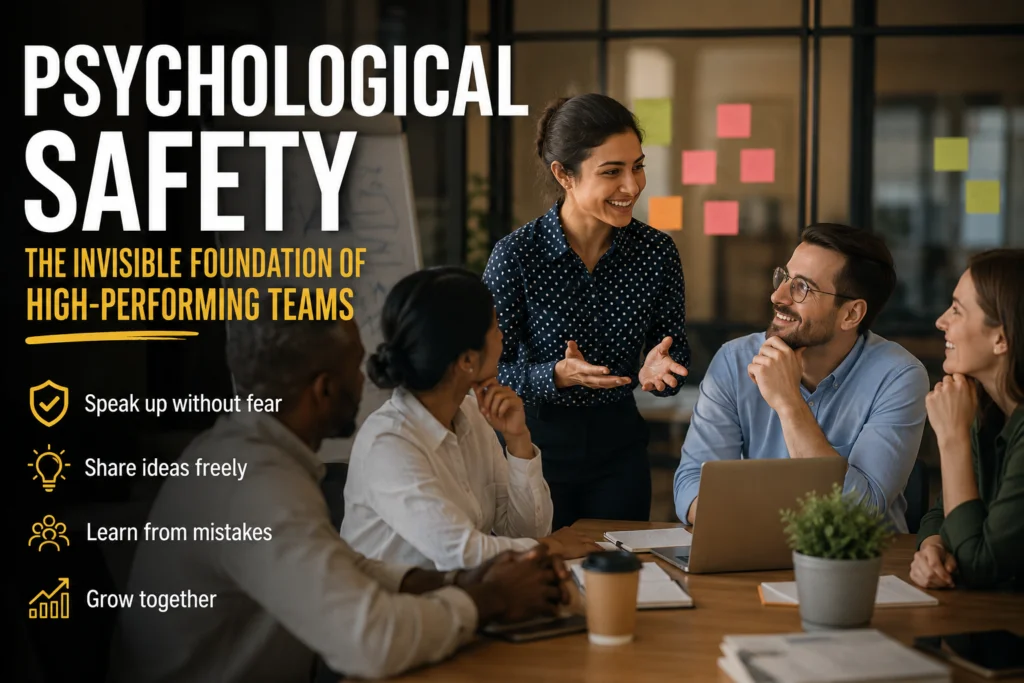
Ask any manager what makes a great team, and you’ll hear the usual answers: talent, clear goals, strong leadership. Rarely do you hear the real answer, the one Google spent two years and a project called Aristotle trying to prove: teams don’t perform because of who is on them. They perform because of how safe people feel being on them.
Psychological safety is the shared belief that you won’t be punished, embarrassed, or quietly judged for speaking up, asking a question, admitting a mistake, disagreeing with a senior colleague, or floating an idea that might not land. It sounds soft. It isn’t. It’s the single strongest predictor of team performance across nearly every industry it’s been studied in.
Project Aristotle
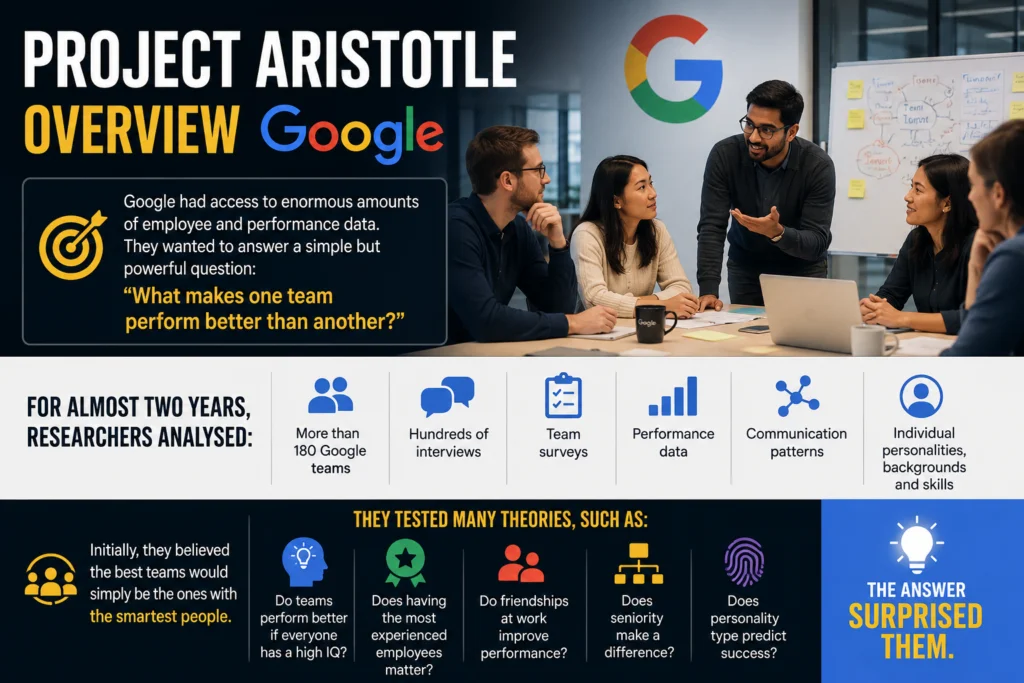
What they discovered
Google found that who is on the team was much less important than how team members interacted. A team of average performers who trusted each other often outperformed a team of brilliant individuals who didn’t. The number one factor that separated high-performing teams from average teams was “Psychological Safety“.
Meaning… Everyone felt comfortable saying things like: I don’t understand, I made a mistake, I have another idea, I disagree, can someone help me? without worrying about being embarrassed, ignored, or punished.
Why It’s So Easy to Miss
Most workplaces don’t lack psychological safety because leaders are cruel. They lack it because silence looks like harmony. A quiet meeting can mean alignment, or it can mean everyone has already decided it isn’t worth the risk to speak. The two look identical from the front of the room, which is exactly why so many managers believe their team is “fine” when it is, in fact, quietly disengaged.
The Three Moments That Reveal It
You can measure psychological safety by watching what happens in three specific moments:
- When someone makes a mistake. Is it treated as data, or as a character flaw?
- When someone disagrees with the most senior person in the room. Does the conversation open up, or does it close?
- When someone asks a question that might make them look like they don’t already know the answer. Do they ask it, or do they Google it later in silence?
If the answer to any of these leans toward silence, you don’t have a motivation problem. You have a safety problem, and no amount of team-building will fix it, because the issue was never a lack of connection. It was a lack of trust in consequences.
The Takeaways:
The biggest lesson from Project Aristotle is this:
High-performing teams are not built by hiring only the smartest people. They are built by creating an environment where people feel safe enough to contribute their best thinking.
A brilliant employee who stays silent adds less value than an average employee who confidently shares ideas, admits mistakes and collaborates.
Leave a Reply